
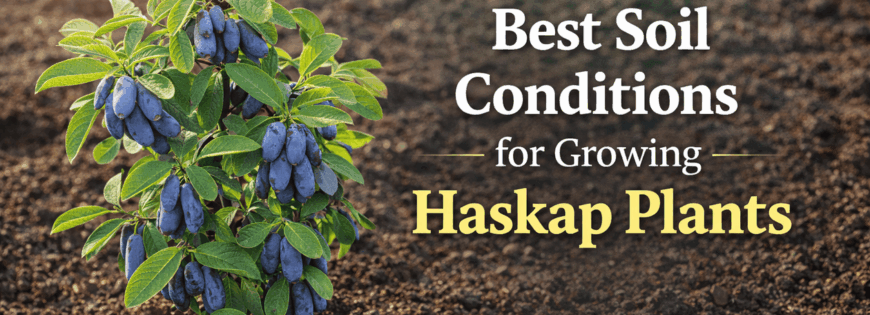
Haskap plants are admired for their extreme cold hardiness, early fruiting season, nutrient-rich berries along. with extremely good flavour. While these shrubs are considered relatively low-maintenance compared to many other berry crops, soil quality plays a crucial role in determining plant health, fruit size, and long-term productivity. Creating the right soil environment ensures strong root development, disease resistance, and abundant harvests year after year.
Ideal Soil pH Range
One of the greatest advantages of haskap plants is their wide soil pH tolerance. Unlike blueberries, which demand highly acidic conditions, haskap thrive in slightly acidic to neutral soil.
- Optimal pH: 5.5 – 6.8
- Acceptable Range: 5.0 – 7.5
This flexibility makes haskap suitable for many home gardens without requiring heavy soil amendments. However, maintaining the soil within the optimal range encourages better nutrient absorption and root health.
Drainage Is Essential
Haskap plants prefer well-drained soil. Although they tolerate occasional moisture, waterlogged conditions can lead to root rot, fungal diseases and possible death. The ideal soil texture is:
- Loamy soil – balanced mix of sand, silt, and clay
- Sandy loam – improves drainage and aeration
- Light clay with organic matter – acceptable if drainage is improved
Avoid heavy clay soil that compacts easily or areas where rainwater pools for extended periods. Raised beds or mounded planting rows can significantly enhance drainage in less-than-ideal soil.
Organic Matter and Soil Fertility
Incorporating organic matter is one of the most effective ways to enhance soil structure and fertility. Haskap plants benefit from nutrient-rich soil that promotes vigorous growth and consistent berry production.
Recommended organic additions include:
- Compost or well-rotted manure
- Leaf mold
- Peat moss or coco coir
- Aged bark mulch
- Wool pellets
These materials improve soil aeration, moisture retention, and microbial activity, all of which support healthier root systems.
Moisture Balance
Haskap shrubs prefer consistently moist but not soggy soil. During their establishment phase, regular watering is critical. Mature plants are more drought tolerant but still perform best when the soil remains evenly moist, especially during flowering and fruit development.
A 2–3 inch layer of organic mulch helps retain moisture, regulate soil temperature, and suppress weeds, reducing competition for nutrients. Note, organic mulches applied too thick, may provide an environment that may host mice and voles that have been known to girdle plants under the snow cover, causing serious issues.
Nutrient Requirements
Haskap plants are moderate feeders. Excessive fertilization can lead to excessive foliage growth at the expense of fruit production. Balanced nutrition supports flowering, berry formation, and plant longevity.
Key nutrients include:
- Nitrogen (N): Supports leaf and shoot growth
- Phosphorus (P): Strengthens root systems
- Potassium (K): Enhances fruit size and flavour
Applying a balanced slow-release fertilizer in early spring is usually sufficient. Organic options such as fish emulsion, bone meal, or seaweed extract also work effectively.
Soil Preparation Before Planting
Preparing the soil properly before planting greatly influences long-term success. Steps include:
- Test Soil pH – Adjust only if necessary.
- Loosen Soil Depth – At least 12–18 inches to encourage deep rooting.
- Add Organic Matter – Mix compost thoroughly into the planting area.
- Ensure Drainage – Create raised beds if the soil is dense or clay-heavy.
- Mulch Immediately – Protect young roots and maintain moisture.
This preparation creates a stable, nutrient-rich foundation that reduces stress during the plant’s establishment period.
Soil Temperature and Seasonal Considerations
Haskap plants are adapted to cooler climates and perform well in soil that warms slowly in spring. They do not require excessively warm soil to break dormancy. However, mulching in late fall protects roots from extreme freeze-thaw cycles, particularly in northern regions.
Common Soil Mistakes to Avoid
- Overly acidic soil below pH 5.0 – restricts nutrient uptake
- Heavy clay without amendments – leads to poor drainage
- Excessive nitrogen fertilization – causes weak fruiting
- Dry, sandy soil without organic matter – results in moisture stress
Avoiding these pitfalls ensures strong plant vigor and reliable berry yields.
Summary of Ideal Soil Conditions
| Soil Factor | Ideal Condition |
| pH Level | 5.5 – 6.8 |
| Drainage | Well-drained, never waterlogged |
| Texture | Loamy or sandy loam |
| Organic Matter | High |
| Moisture | Consistently moist, not soggy |
| Fertility | Moderate, balanced nutrients |
Providing the right soil conditions allows haskap plants to express their full potential—robust growth, early flowering, and nutrient-dense berry production. With proper preparation and maintenance, these resilient shrubs can thrive for decades, delivering dependable harvests even in colder climates.